Part of our guide: AI Calling in India: The Complete 2026 Guide
Key takeaways
- Univid's 2026 data puts average live webinar attendance at 49% of registrants, and ON24 reports that 57% of registrations became attendees in 2024, live or on-demand.
- Most no-shows come from forgetting, a buried link, the wrong time or no reason to come live. Each has a fix.
- Put the link on WhatsApp, not only in email, and add two short calls: the evening before and one hour before.
- Measure three numbers: unique registrants, unique live attendees and people still there when the offer starts.
- Decide in advance whether no-shows get the recording or a seat at the next live session.
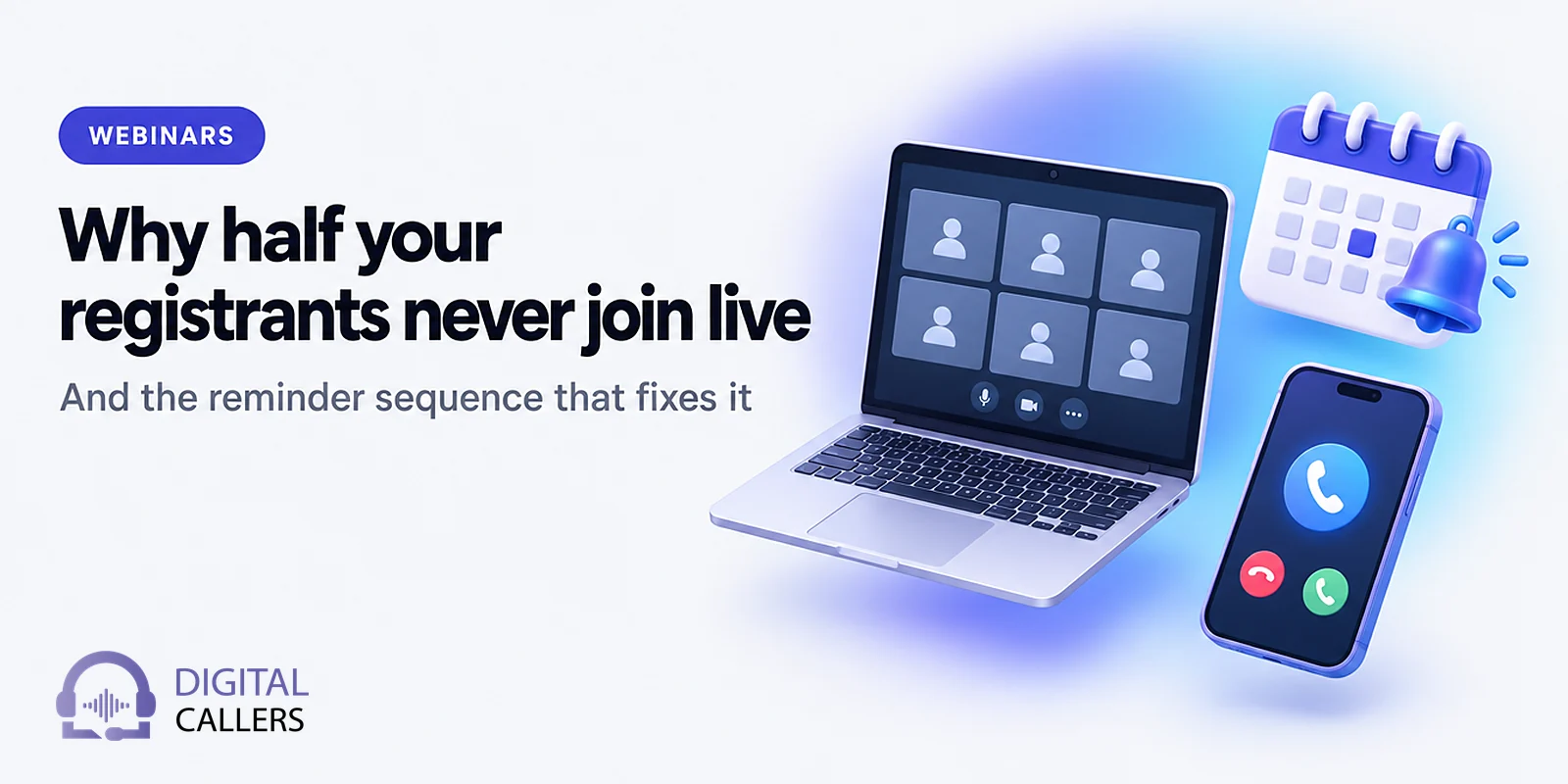
Webinar attendance is where most masterclass funnels quietly lose money: you pay for every registration, and on the published benchmarks only about half of those people join live. Most no-shows are not a sign that people lost interest. They forgot, they missed the link, or they never decided to come at all. This guide covers why Indian registrants skip, what gets them into the room, a complete reminder sequence for a 7 pm masterclass, what to do with no-shows, and how to measure attendance without fooling yourself. If you want the calls in that sequence run for you, see our webinar reminder calls page.
How many webinar registrants actually show up?
About half, if you count live attendance. Univid's 2026 webinar insights, based on more than 2,000 webinars hosted on its platform, put the average live attendance rate at 49%, rising to 57% once replay viewers are counted. ON24's 2025 benchmarks found that 57% of registrations converted to attendees in 2024, and that 56% of those attendees joined live while 45% watched on-demand (a few did both). In a 2019 analysis, GoTo's webinar benchmarks gave an average attendance rate of 44% for marketing webinars.
Read these numbers with care. They come mostly from B2B webinars on global platforms, where people often register with a work email for a session during office hours. We have not found a published benchmark for Indian consumer masterclasses filled from Instagram and Facebook ads, so do not assume you will match these figures. Your own webinar attendance rate, tracked by traffic source, is the only benchmark that matters for your budget.
Why do registrants not show up?
Because signing up costs them almost nothing, and remembering costs effort. These are the usual reasons.
- Impulse sign-ups from ads. A lead form that takes two taps fills fast, and some of those people barely remember registering. Low-intent sign-ups are a separate problem from attendance; we cover them in junk leads from Facebook ads.
- Wrong time or time zone. A 7 pm IST session suits Delhi office-goers but not a shop owner who closes at 9 pm, or an NRI investor in Dubai or Toronto.
- The link is buried. Many registrants give an email address they rarely open. On the day, they search their inbox, give up and move on.
- No commitment. A free session asks for nothing, so skipping it feels like nothing.
- Too long a gap. Someone who signs up three weeks ahead has three weeks to forget. Most people register close to the date anyway: GoTo found that 59% of registrations happen less than a week before the webinar and 17% on the day itself.
- No reason to come live. If the registrant expects a recording, "recording toh mil hi jayegi" wins over a busy evening.
What actually drives webinar attendance?
A short gap between sign-up and session, a time that suits your audience, the link in a place they actually look, a personal nudge before the start and a real reason to be there live. None of these is expensive. Most businesses simply leave one or two out.
| Lever | What to do | Why it works |
|---|---|---|
| Gap from sign-up | Run sessions weekly or fortnightly so most sign-ups are a few days away | Less time to forget |
| Day and time | Test two slots; Univid saw Wednesday (51%) and Thursday (50%) highest for live attendance | Matches when your audience is free |
| Calendar invite | Have your webinar or email tool attach a calendar invite at sign-up | The phone reminds them, not just you |
| Send the join link and every reminder on WhatsApp | It is where Indian registrants read messages | |
| SMS | Use as a fallback for numbers not on WhatsApp | Reaches basic phones and full inboxes |
| Phone calls | A short call the evening before and an hour before | A spoken "yes, I'll come" is a stronger commitment than a read receipt |
| A reason to be live | Live Q&A, a worksheet shared only in the session, a live-only bonus you will honour | Gives them a cost to skipping |
On day and time, the published data leans towards office hours. Univid reports attendance peaking at 3 pm local time, which fits B2B audiences watching from a desk. For a stock-market course or a NEET coaching masterclass, your audience is free after work and after classes, so evening slots are the sensible starting point. Test rather than copy.
On WhatsApp costs, utility reminders are cheap per message, but check current rates in our guide to WhatsApp Business API pricing in India before you plan volumes.
Never invent scarcity. "Only 50 seats left" on a Zoom webinar that holds 1,000 people gets noticed, and it costs you trust at the exact moment you make your offer. Give a real reason to come live instead.
What should a reminder sequence look like for a 7 pm masterclass?
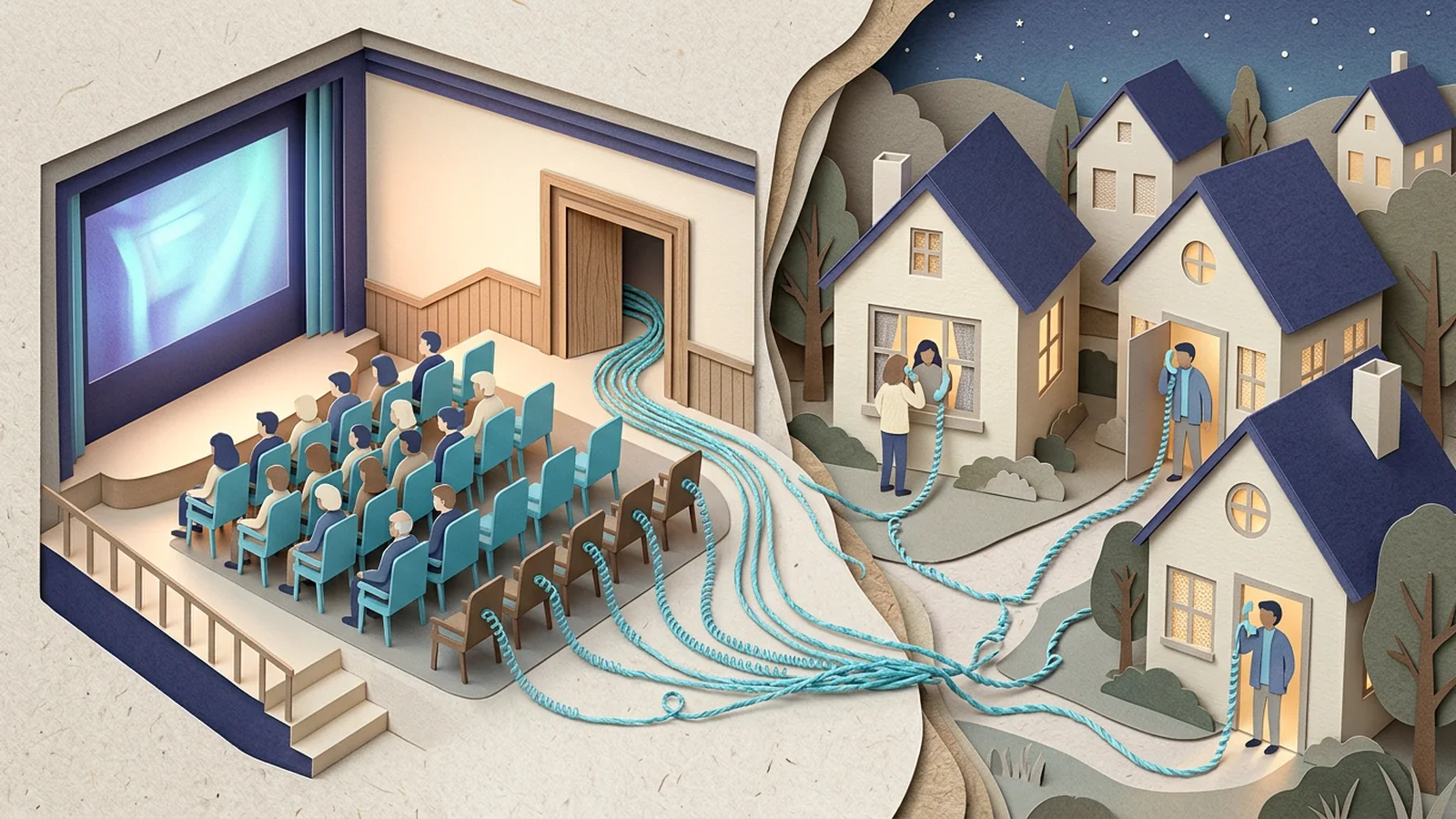
Six touches, spread from sign-up to the next morning, with WhatsApp carrying the link and two short calls carrying the commitment. Here is a hypothetical example. Say a stock-market course in Indore, call it Nivesh Path Academy, runs a free 7 pm Wednesday masterclass for Hindi-speaking beginners.
| When | Channel | What the message says |
|---|---|---|
| At sign-up (within minutes) | WhatsApp, plus calendar invite by email | "Aapka seat confirm hai: Wednesday, 7 pm. Join link yeh raha. Session mobile pe bhi chalega." |
| Day before, around 6–7 pm | Phone call, then WhatsApp | Call confirms the time and asks "Kal shaam 7 baje aa paoge?" Records yes, no or "different day". WhatsApp resends the link. |
| Morning of the session | One line on what they will learn, one reason to come live (live Q&A), and the link again. | |
| 1 hour before (6 pm) | Phone call, SMS fallback | "Ek ghante mein shuru ho raha hai. Link WhatsApp pe bheja hai. Phone charge kar lijiye." |
| 5 minutes after start (7:05 pm) | WhatsApp to those not yet in | "Hum live hain. Abhi join kariye, pehla part chal raha hai." |
| Next day, late morning | Phone call to no-shows, then WhatsApp | Asks what got in the way, offers next Wednesday's session or a replay with a 48-hour expiry. |
The 7:05 pm message only works well if you can see who has joined. If your webinar platform can export that quickly, send it only to those not in the room; if not, keep the message short and send it to everyone who said yes the day before.
Here is how the day-before call might sound on our agent, in Hinglish, for a hypothetical registrant:
- "Namaste, Rohit ji. Main Nivesh Path Academy se bol rahi hoon."
- "Aapne kal shaam 7 baje ke free masterclass ke liye register kiya tha."
- "Kya aap kal join kar paoge?"
- If yes: "Badhiya. Link WhatsApp pe bhej diya hai. Session ke end mein live Q&A bhi hai."
- If no: "Koi baat nahi. Agle Wednesday 7 baje ka session chalega?"
- "Thank you, Rohit ji. Kal milte hain."
Short turns, one fact each, and an easy way to say no. A registrant who says "next week" on the call is worth more than one who silently skips, because you can move them instead of losing them.
What should you do with webinar no-shows?
Sort them first, then choose between the recording and the next live session based on what the webinar is for. Someone who said "yes" on the call and still did not come needs a different message from someone who never answered at all.
Give the recording when the session is mainly teaching or a product walkthrough. Say a real-estate developer in Gurugram runs a hypothetical investor webinar on a new commercial project for NRI buyers. Half the audience was asleep in Toronto or busy in Dubai, so a replay with a 48-hour window, followed by a call to book a one-to-one, makes more sense than chasing them to the next live slot.
Invite them to the next live session when the live part carries the value: a Q&A, a live offer, a doubt-clearing round. A NEET coaching institute in Jaipur, say Saraswati Classes, would rather have a parent attend next Sunday's live session than watch a recording where nobody answers their fee question. More on how coaching businesses use calls on our edtech and coaching page.
For B2B demos, rebook a slot. If a hypothetical Ludhiana machine-tools software company has a plant manager who missed its group demo, the next step is a 20-minute one-to-one, not a replay link that sits unopened.
Stop after one call and one message for people who never responded. Calling the same number again and again for a free session annoys people and invites spam complaints against your number.
How do you measure webinar attendance rate properly?
Divide unique live attendees by unique registrants, and track a third number: how many were still there when the offer or main ask began. Most dashboards show total registrations and total joins, which hides the problems.
- Unique registrants. Remove duplicates by phone number. Ad forms often collect the same person twice.
- Unique live attendees. Count people, not joins. Someone who drops out and rejoins three times on a weak mobile network is one attendee.
- Stayed till the offer. Note the time your pitch or main ask starts, and count who was still connected then. This is the number that pays for your ads.
- Replay viewers. Track them separately. Univid suggests counting live plus replay as the fuller picture, which is fair, but keep the live figure visible too.
Here is a hypothetical example for one session:
| Metric | Count | Rate |
|---|---|---|
| Form submissions | 1,200 | |
| Unique registrants after de-duplication | 1,050 | |
| Unique live attendees | 420 | 40% of registrants |
| Still present when the offer started | 260 | 62% of attendees, 25% of registrants |
| Replay viewers within 48 hours | 90 | 9% of registrants |
The useful cost figure is ad spend divided by people who stayed till the offer, not cost per registration. A campaign with cheap registrations and poor attendance can cost more per real viewer than one with expensive but committed sign-ups.
What changes for Indian audiences?
Four things: WhatsApp comes first, language matters, evenings rule, and most people join on a phone. A sequence copied from a US playbook usually gets all four wrong.
- WhatsApp first. Email works as a backup and for calendar invites. The join link, the reminders and the "we're live" message belong on WhatsApp.
- Hinglish and regional languages. A Hindi-speaking beginner in Bhopal follows "Kal shaam 7 baje" more easily than a formal English reminder. Our agents speak Hindi, English, Hinglish, Marathi, Kannada, Tamil, Telugu and Bengali.
- Evening slots. Working adults, students and shop owners are mostly free after 7 pm. Weekend mornings can work for parents and investors. Test both.
- Mobile joining. Tell people in the morning message to install the webinar app in advance, charge the phone and use earphones. The one-hour call can repeat it. Keep slides readable on a small screen.
The same thinking applies to appointment reminders, which we cover separately for clinics in reducing OPD no-shows with reminder calls.
How do you set up reminder calls for your next webinar?
Connect your registration source, approve a short script, test it on your own team, and run it for two or three sessions before judging the results. Here is the practical order.
- Connect registrations. A Google Sheet, Facebook and Instagram lead ads, your CRM or a webhook from your webinar tool. Our guide to calling Facebook leads from Google Sheets shows the sheet setup.
- Agree the sequence. Use the table above as a starting point and set the exact call times, retries and the "next session" date.
- Approve the script and facts. We build the agent on your script, your session details and your approved answers, such as fees, batch timing and replay rules.
- Test with your team. Say yes, say no, ask for next week, answer in Hindi, ask a fee question. Check each outcome lands in the right column.
- Run and read. Every call is recorded and transcribed with an outcome and a summary, and WhatsApp confirmations go out after the call. Compare live attendance and stayed-till-offer across sessions.
On cost, a short reminder call runs roughly ₹3 to ₹8 on our plans, billed in 30-second pulses, and unanswered calls are not billed. Two calls per registrant comes to roughly ₹6 to ₹16 before 18% GST. Plans start at a 3,000-minute monthly bundle, so check your volumes on our pricing page.
Webinar attendance improves when every registrant hears from you at the right moment, in their language, on the channel they actually use. See how we run webinar reminder calls for coaching institutes, course creators and B2B teams. Book a 20-minute demo and we'll call your phone with an agent set up for your next session.
Frequently asked questions
What is a good webinar attendance rate?
On published benchmarks, anything at or above 50% live is good. Univid's 2026 data puts the average live attendance rate at 49%, and its own guide calls a live rate above 50% good. Those figures come mostly from B2B webinars, so track your own rate per traffic source and treat that as your real baseline.
How many reminders should we send before a webinar?
For an evening masterclass, plan five or six touches from sign-up to the next day, across WhatsApp and two short calls. That sounds like a lot, but each one does a different job: confirm the sign-up, get a yes for tomorrow, put the link in front of them, and catch the late ones. Cut any touch that your data shows is not moving attendance.
Should we send the recording to people who did not attend?
Send it when the webinar is mainly education or a product walkthrough, and give it a short expiry such as 48 hours. If the session ends in a live offer or a live Q&A that the recording cannot replace, invite no-shows to the next live session first and keep the recording as a fallback.
Is a reminder phone call worth it for a free webinar?
It usually is when you paid for the registration through ads. A short reminder call costs roughly ₹3 to ₹8 on our plans, and unanswered calls are not billed. Compare that with what each registration cost you in ad spend, and with the value of one extra person staying till your offer.
What time should an Indian masterclass start?
For working adults and college students, an evening slot after work and classes, such as 7 pm or 8 pm, is the usual starting point. Published benchmarks favour mid-week afternoons, but those are mostly B2B webinars watched from an office. Run the same session at two different slots for a few weeks and keep the one with the higher live attendance.
We build and run AI calling agents for Indian businesses from Gurugram, in Hindi, English and regional languages. Our articles draw on calls we have run ourselves and link to primary sources such as TRAI, DoT and MeitY for anything regulatory. Spotted something out of date? Write to support@digitalcallers.com.
See it on your own leads
In a 20-minute demo we set up an agent for your business and call your phone while you watch.