Part of our guide: AI Calling in India: The Complete 2026 Guide
Key takeaways
- Inbound AI calling means a voice agent answers your incoming calls, handles routine questions from approved facts and books call-backs or appointments.
- The after-hours line should be narrow on purpose: take name, interest and call-back time, and never quote prices or availability at night.
- Language handling matters more than voice quality; the agent should switch only when the caller speaks a full sentence in another language.
- Complex, angry or high-value calls should still reach a person; the AI's job is to make sure no caller goes unheard.
- On our plans, AI call answering is billed per minute in 30-second pulses, and a details-capture call is usually short.
An AI receptionist in India does one job most front desks cannot: it picks up every inbound call, at 11 AM on a busy Saturday or at 10 PM after the office has shut, and speaks to the caller in Hindi, English, Kannada or whichever language they use. This guide explains how inbound AI calling works, what an after-hours line should and should not say, and what it costs.
What is inbound AI calling, and what does an AI receptionist do?
Inbound AI calling is when a voice agent answers the calls customers make to your business. An AI receptionist greets the caller, works out what they want, answers routine questions from facts you have approved, captures their details and books an appointment, site visit or call-back. Anything outside its brief goes to your team with a summary.
Think of it as a front desk that never goes on lunch and never lets the phone ring out.
What it is not
It is not an IVR menu. Nobody has to "press 2 for sales"; the caller speaks normally and the agent responds to what was said. See AI calling vs IVR vs robocalls for the full difference.
Why do missed calls cost Indian businesses more than they think?
A missed call is often a lost enquiry, not a delayed one. India still runs on the phone: TRAI reports 1,207.59 million active wireless subscribers in August 2026, and average usage of about 950 minutes per subscriber per month in 2025–26. A caller who gets no answer simply calls the next business on the list.
The figures come from TRAI's telecom subscription data for August 2026 and its yearly performance indicators for 2025–26. Your customers are comfortable calling, and they expect someone to pick up.
Speed matters on the way back too. A study published in Harvard Business Review found that firms which tried to contact online enquiries within an hour were nearly seven times as likely to qualify the lead as those that waited even an hour longer. That research covered US web leads, not Indian phone calls, but the lesson carries over: interest fades fast.
What we see on our own inbound lines
Our platform handled 4,852 inbound calls between May and October 2026, and about half lasted 15 seconds or more. Treat that carefully: it mixes campaign types (including people calling back after an event invitation), call length is only a rough proxy for a real conversation, and results vary by industry, list quality and time of day. Still, a meaningful share of people who call back stay on the line and talk.
How does an AI receptionist answer a call, step by step?
An AI receptionist follows the same short path on every call: answer in the right language, find out what the caller wants, respond from approved facts, capture details, confirm the next step and say goodbye properly. The setup work is in deciding what it may say, what it must never say and when to hand over.
Here is how we set up AI call answering for a business:
- Pick the number and the hours. Main line, overflow line or a separate after-hours number. Many businesses start with after-hours and lunch-time overflow only.
- Set the default opening language. The first line must be in the language most callers use. We learnt this the hard way: a wrong default language at the very start once made an agent go silent until we fixed the setting.
- Write the facts the agent may use. Timings, location, what you offer, what to bring, booking rules. One agent per project or product, each with its own locked set of facts.
- Write the "never say" list. Prices that change, discounts, medical or legal advice, anything about another project.
- Define the capture fields. Usually name, interest and preferred call-back time. Fewer fields, shorter calls.
- Set the hand-off rules. Which requests need a person, and how fast.
- Connect the outputs. Call results go into your Google Sheet or CRM, with recordings, transcripts and a short summary, plus a daily email report.
- Test together, then go live. We call the agent ourselves, then you do, in every language you expect, before a single customer hears it.
Write the greeting as a question the caller can answer in two words. "Namaste, this is the virtual assistant for the project. Are you calling about a site visit or something else?" gets the caller talking immediately, which is better than a 20-second introduction they talk over.
How the agent speaks matters as much as what it says
A sales manager who tests our calls gave us blunt feedback, and every point applies to inbound. Long monologues feel rushed even when the voice speed is fine, so the agent says one or two sentences per turn, one number per turn, then stops. When a caller says "hello?" mid-sentence, a naive agent restarts its whole line; short turns fix most of that. And calling a woman "Sir" repeatedly is a real failure in Indian calls, so our agents use the caller's name with "ji" or "avare" and never assume gender.
What should an after-hours front-desk line say, and never say?
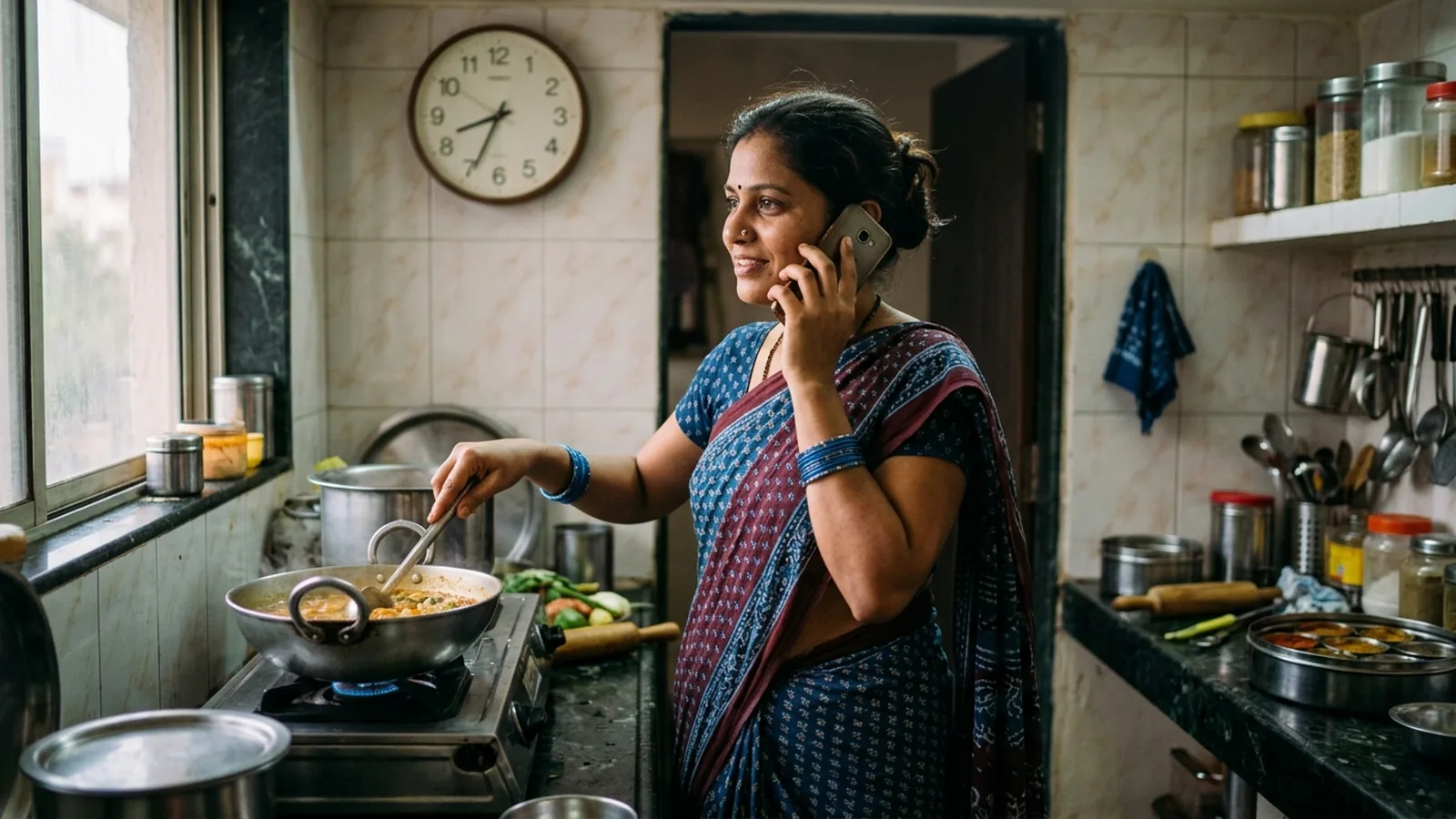
After-hours call answering should do less than a daytime agent, not more. Its job is to make sure nobody calling at night feels ignored: greet them, take their name, what they are interested in and when they would like a call, then promise that the team will call back. It should not quote prices, availability or offers.
Koravi Developers, a plotted-development real-estate company in North Karnataka, runs our AI agents to call enquiries in Kannada, Hindi and English and book site visits. Each project has its own agent with its own locked facts, a rule we introduced after an early setup where one agent loaded several projects and mixed up their prices and locations.
The company also added an after-hours front-desk line: a separate agent that never gives project details. It only takes the caller's name, interest and preferred call-back time, and promises a call from the project team. At night nobody can correct a wrong answer, so the safest night agent is one that cannot give one.
A sample after-hours flow
This is an illustrative script shape, not a transcript:
- Agent: Namaskara, you have reached the project office. The team is not available right now, but I can arrange a call back. May I know your name?
- Caller: gives name.
- Agent: Thank you, [name] ji. Which project or plot size are you interested in?
- Caller: answers.
- Agent: What time tomorrow suits you for a call from our team?
- Caller: gives a time.
- Agent: Noted. Someone from the project team will call you tomorrow at that time. Thank you for calling, have a good night.
The goodbye matters. Our platform holds the hang-up until the goodbye has finished playing; cutting off mid-sentence undoes the goodwill of the call.
Which calls should an AI receptionist handle, and which should go to a person?
An AI receptionist should handle routine, repeatable calls where the answer is known and the next step is a booking or a call-back. It should pass on anything emotional, complicated, high-value or outside its facts. The rule we use: if a wrong answer would cost money or trust, a person handles it.
| Call type | AI receptionist handles it? | What it does |
|---|---|---|
| "What are your timings / where are you?" | Yes | Answers from approved facts |
| Site visit, demo or appointment request | Yes | Books the slot or a call-back at the time the caller asks |
| Calling back after missing your call | Yes | Explains why you called, captures interest |
| After-hours enquiry | Yes, narrowly | Takes name, interest, call-back time only |
| Price negotiation or special discount | No | Takes details, flags for the sales team |
| Complaint or angry caller | No | Apologises, captures the issue, escalates fast |
| Medical, legal or financial advice | No | Captures the question for a qualified person |
During working hours, our live monitor lets your team listen in, whisper to the agent or take over a call, which is how most businesses build trust in the first weeks.
How much does AI call answering cost in India?
On our plans, AI call answering is billed per minute in 30-second pulses, at ₹8, ₹7 or ₹6 a minute depending on the plan, plus a one-time setup and ₹2,000 per number per month, all plus 18% GST. An after-hours details-capture call is short, so per-call cost stays low.
| Plan | Setup (one-time) | Monthly minimum | Agents included | Numbers |
|---|---|---|---|---|
| Starter | ₹25,000 | 3,000 min at ₹8/min (₹24,000) | 1 | ₹2,000/number/month |
| Growth | ₹50,000 | 5,000 min at ₹7/min (₹35,000) | 2 | ₹2,000/number/month |
| Scale | ₹1,00,000 | 10,000 min at ₹6.50/min (₹65,000) | 4 | ₹2,000/number/month |
All figures are plus 18% GST. Short confirmation calls under a minute cost roughly ₹3–8, and a two-minute conversation roughly ₹12–16. If you want an after-hours line plus a daytime sales agent, that is two agents, which is why many businesses start on Growth. Full details, including Enterprise, are on our pricing page.
Say a clinic gets 60 after-hours calls a week of about a minute and a half each (an example, not a client figure). That is under 400 minutes a month, well inside a monthly minimum, so most businesses use the rest for outbound follow-up.
Common mistakes when setting up an AI receptionist
The most common mistake is asking one agent to do everything: answer every product, quote every price and handle complaints. The second is ignoring language behaviour. Both are avoidable with a narrow brief, separate agents per project and proper testing in each language before going live.
- One agent, many products. Facts bleed between projects. Keep one agent per project with its own locked facts.
- Quoting prices at night. If prices change or depend on the unit, the after-hours agent should not quote them.
- Switching language on one word. An agent that hears "okay" and switches to English, then hears "haan" and switches back, sounds broken. Switch on a full sentence only.
- No owner for call-backs. If the AI promised a call at 11 AM and nobody makes it, the caller is angrier than if no one had answered. Someone must own the call-back list.
- Hiding that it is an AI. Say it plainly. Callers forgive a virtual assistant; they do not forgive being misled.
Is an AI receptionist in India right for your business?
An AI receptionist fits best when you get a steady flow of calls with predictable questions, especially outside office hours or during peaks: real estate, clinics, coaching institutes, hospitality, home services. It fits poorly when nearly every call is a complex, one-off conversation that needs a specialist.
If most of your calls are outbound follow-up rather than incoming, start with outbound AI calling that reaches every lead within minutes instead. For the bigger picture, our complete guide to AI calling in India covers both directions, and the AI receptionist page shows how the product works day to day. Real-estate teams can see how inbound and outbound fit together on AI calling for real estate.
An AI receptionist in India will not close your deals for you, but it can make sure every caller is heard, gets a straight answer in their language and leaves with a confirmed call-back. If you want to hear one before deciding, book a 20-minute demo — we'll call your phone with an agent set up for your business.
Frequently asked questions
What is an AI receptionist?
An AI receptionist is a voice agent that picks up your business's incoming calls, speaks with the caller in their language, answers common questions from facts you approve, takes their name and requirement, and books an appointment or a call-back. It runs on your existing number or a new one and hands complex calls to your team.
Can an AI receptionist in India speak Hindi and regional languages?
Yes. Our agents speak Hindi, English, Hinglish, Kannada, Marathi, Tamil, Telugu and Bengali. The agent opens in the default language you choose and switches when the caller speaks a full sentence in another language, not on a stray 'hello' or 'haan', so it does not flip back and forth mid-call.
What should an after-hours AI receptionist say?
Keep it narrow. A good after-hours line greets the caller, takes their name, what they are interested in and a preferred call-back time, then promises a call from the team. It should not quote prices, availability or offers at night, because nobody is around to correct a mistake before the caller acts on it.
How much does AI call answering cost in India?
On our plans, calls are billed per minute in 30-second pulses at ₹6 to ₹8 a minute depending on plan, plus a one-time setup and ₹2,000 per number per month, all plus 18% GST. A short inbound call where the agent takes details usually runs under two minutes. See the pricing page for the full plan details.
Will callers know they are talking to an AI?
They should. We recommend the agent says it is the business's virtual assistant early in the call. Callers mostly care whether their question gets handled and a person calls back when promised. Hiding that it is an AI tends to backfire the moment the caller asks something unexpected.
We build and run AI calling agents for Indian businesses from Gurugram, in Hindi, English and regional languages. Our articles draw on calls we have run ourselves and link to primary sources such as TRAI, DoT and MeitY for anything regulatory. Spotted something out of date? Write to support@digitalcallers.com.
See it on your own leads
In a 20-minute demo we set up an agent for your business and call your phone while you watch.